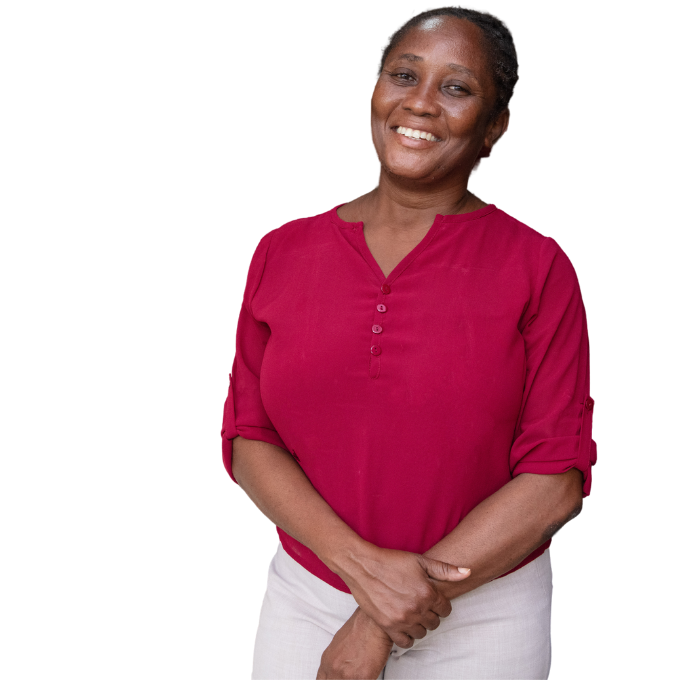
“We never give up on our patients. We are proud of our mission, which is to serve the most vulnerable.”
Your donation can help Dr. Clermont and our entire staff care for more patients than ever before.
Image
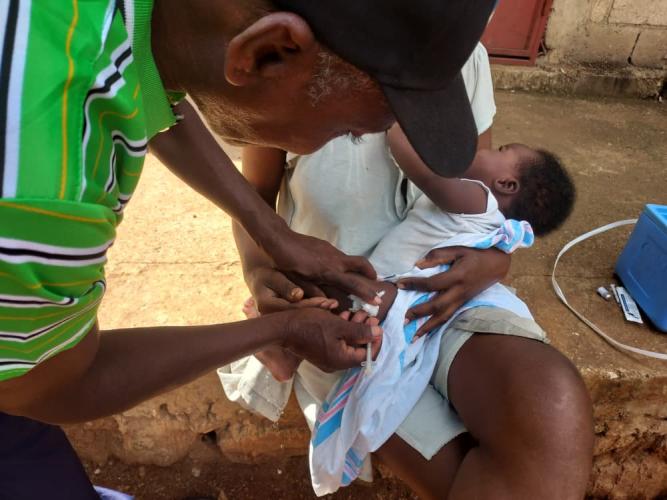
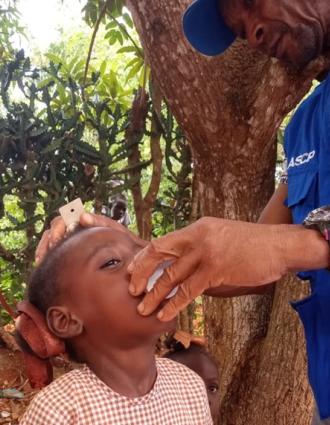
A community health worker vaccinates a child near L’Asile, Haiti.
We created the Healthy Futures Haiti (HFH) project in response to the abrupt loss of our USAID-funded Improved Health Service Delivery (IHSD) program. With few functional hospitals left in the country, we’re doing everything in our power to keep quality care available in southern Haiti.
Together with HFH Director Dr. Mario Laroche, we’ve put together a primer on what the project is, how it’s meeting the moment, and why continuing this work is so important for the road ahead.
What is the HFH Project?
HFH supports maternal and child health, and water, sanitation, and hygiene (WASH) services at a network of healthcare facilities in southern Haiti, specifically in the Nippes and South geographic departments.
The project is a one-year collaboration among three public and private entities: the Haitian Ministry of Health, Mission Évangélique Baptiste du Sud d’Haïti, and St. Boniface Hospital. Together, these groups manage a network of eight health facilities across the region.
Participants receive financial support to help fund the staff and resources needed to deliver care. The institutions also receive managerial assistance to support coordination, supervision, monitoring, and reporting.
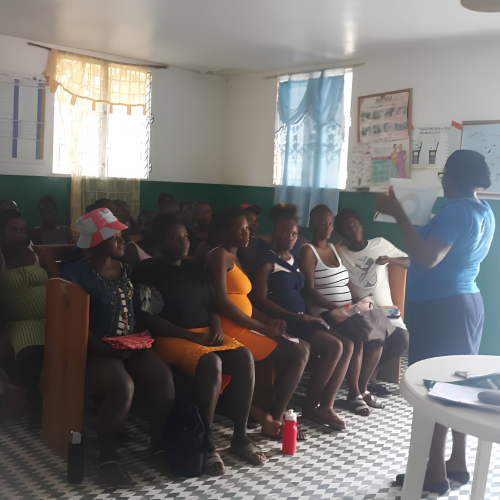
Women in Plaisance, Haiti, attend a mother’s club session.
How does this project differ from HEI’s former USAID project? What is the same?
HFH continues IHSD’s focus on supporting quality maternal and child health services and good WASH practices at the facility level. IHSD, however, also supported HIV activities, clinical training, and technical assistance, and operated within a framework focused on proactive system development and strengthening. In contrast, HFH serves a much smaller network and is reactive, helping mitigate the devastating funding loss that followed USAID’s dissolution.
What has HFH accomplished in the past year?
HFH’s financing and administrative support helped each institution to relaunch or stabilize its community-based health activities. As service availability increased, attendance at community health events surged.
How have cutbacks on foreign aid impacted healthcare in Haiti over the past year?
USAID’s sudden closure has significantly weakened Haiti’s healthcare system and curtailed health service delivery for highly vulnerable people. International aid was already in significant decline; the decline is now much steeper. Haiti’s urgent, ongoing crises have made it difficult for most people to pay for care. At the national level, the crises have also made it difficult to develop and implement a strategy to help support and improve the health system.
Why is continued funding for projects like this important for Haiti right now?
In the short and medium term, HFH and similar initiatives can help keep essential health services available and accessible to protect health and save lives. In the medium and long term, these kinds of projects should serve as bridges to mitigate the effects of the crises and help transition toward an adequately structured systemic response to Haiti’s healthcare challenges.
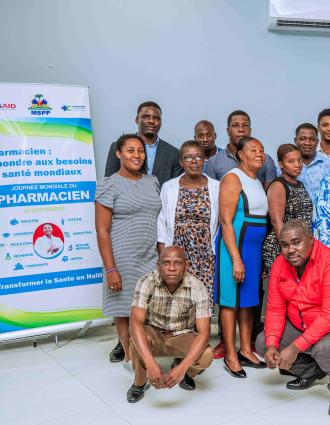
Your donation can help Dr. Clermont and our entire staff care for more patients than ever before.