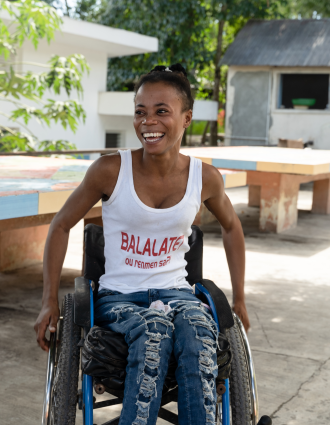
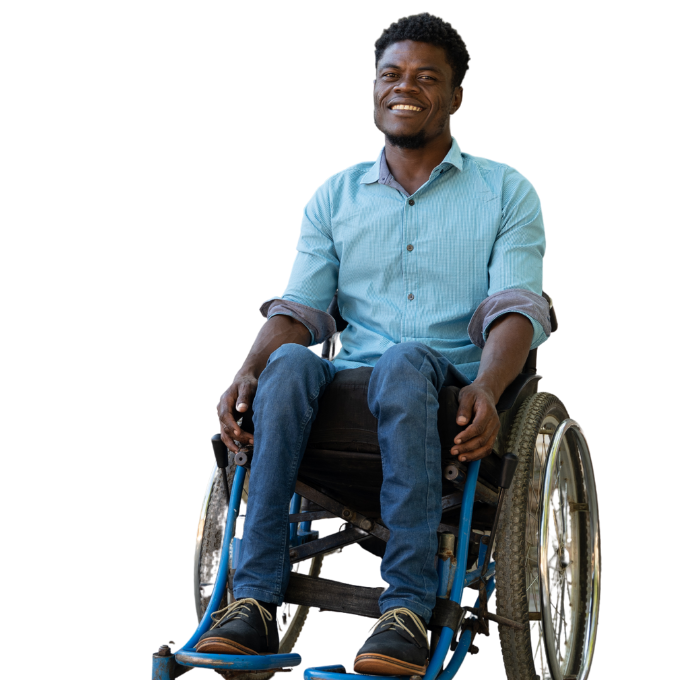
“My favorite thing about my job is helping people realize their autonomy—just like I have.”
Your donation will help Maxsony provide critical support for patients with spinal cord injuries.
Image
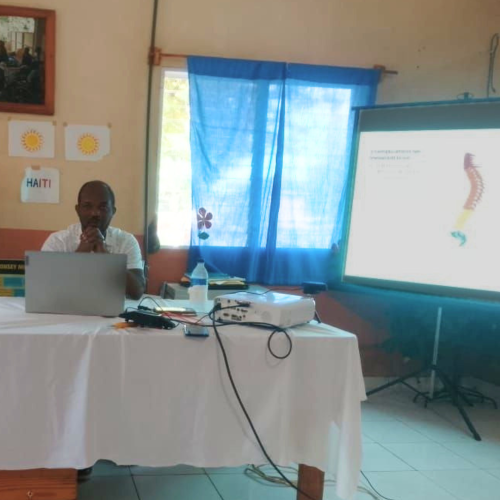
Dr. Berthony Guerrier, Head of Obstetrics and Gynecology.
In January 2026, St. Boniface Hospital held a training, education, and advocacy session about perinatal care for women with a spinal cord injury (SCI). Dr. Berthony Guerrier, Head of Obstetrics and Gynecology, and Social Worker Elyseè St. Cyr collaborated to create the training, with Dr. Guerrier leading the event itself. In the interview below, Mr. St. Cyr explains the goals of the training, reducing barriers for people with disabilities, and how you can help.
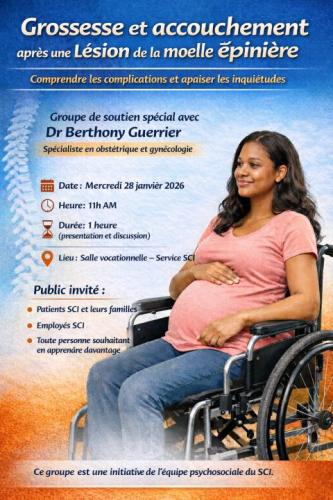
A flier for the training.
Q: What was the focus of this training?
A: The training focused on pregnancy and childbirth after an SCI. It explained that women with an SCI can still become pregnant, but need special care during pregnancy. The training also introduced some of the complications that can occur, and emphasized the importance of follow-up with a multidisciplinary medical team.
Q: Why is training important for patients and families? Why is it important for clinicians/caregivers?
A: For patients and families, training helps reduce fear and misinformation about pregnancy after an SCI. It also gives them the tools to make informed decisions about their reproductive health and family planning. For clinicians and caregivers, it strengthens their ability to understand the special needs of these patients and encourages collaboration between rehabilitation and maternity services, and all other services.
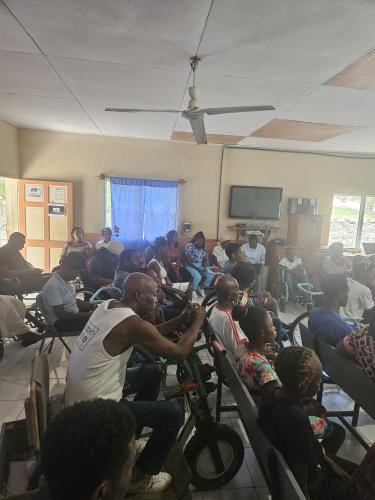
More than 40 SCI program beneficiaries, family members, and hospital staff attended the session.
Q: How does this training help others better understand the needs, desires, and humanity of people with disabilities?
A: These trainings remind us that people with disabilities have the same dreams and aspirations as everyone else, such as starting a family. When patients participate in discussions, it helps change the way society views disability. It emphasizes the dignity, rights, and abilities of people rather than limiting them to their medical conditions.
Q: Is there anything else you would like to share about the SCI program?
A: As a social worker, I walk alongside patients and their families. I serve as a liaison between hospital staff and people with disabilities. I plan and carry out home visits, which are crucial to understanding the realities of patients’ lives, supporting them in their communities, and improving their follow-up.
The security situation severely limits these visits today, as many patients live in difficult conditions and do not always receive the support they need. That’s why the support of partners and donors is essential to allow us to continue providing these services, helping patients regain hope, and live with more dignity.
Your donation will help Maxsony provide critical support for patients with spinal cord injuries.